Dental implants replace missing teeth with stable, long-lasting fixtures that act like real tooth roots. Knowing the types of dental implants matters because the right choice affects cost, recovery, and long-term success. Options range from single-tooth implants to full mouth dental implants in Louisville, KY, and this post helps you compare choices and plan next steps.
Types of dental implants in Louisville, KY
There are three main implant categories to know about:
- Endosteal (root-form) implants — the most common. Small titanium or zirconia screws placed into the jawbone to hold crowns, bridges, or full-arch prostheses.
- Subperiosteal implants — sit on top of the jawbone under the gum. Used when bone height is low and grafting isn’t an option.
- Mini implants — smaller diameter implants often used for temporary support or to stabilize dentures on a limited budget.
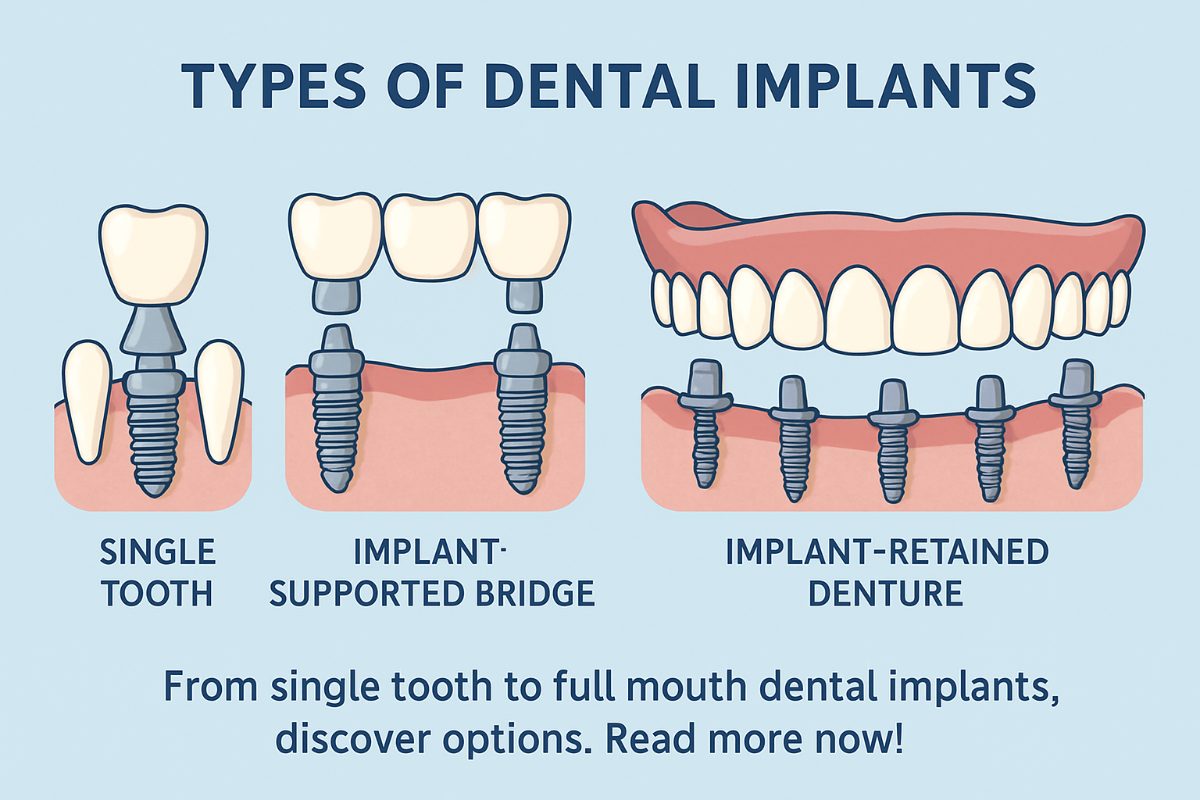
Also important is the difference between implant-supported dentures and implant-supported crowns or bridges. Implant-supported dentures can be removable or fixed and often need fewer implants for a full arch, while crowns and bridges replace one or several teeth with individual support.
Common implant designs and materials
Implant fixtures most often come in titanium or zirconia. Titanium is well proven and integrates reliably with bone. Zirconia is metal-free and may appeal to patients with metal sensitivities.
Designs include tapered implants (mimic natural root shape and can help in softer bone) and parallel implants (used when bone is dense). Surface treatments — roughened or coated surfaces — help osseointegration, the process where bone bonds to the implant.
Abutments connect the implant to the final restoration. Restorative options include single crowns, bridges, and full-arch prostheses that can be removable or fixed depending on implant number, placement, and patient preference.
Choosing between single tooth, multiple, and full mouth dental implants in Louisville, KY
Single-tooth implants replace one missing tooth and usually give the best natural feel and look. Implant bridges replace several teeth without placing an implant for every gap. Full-arch solutions like All-on-4 or All-on-6 use a few implants to support an entire arch.
- Longevity: Single implants and full-arch restorations both can last decades with proper care.
- Cost: Single implants cost less than full-arch solutions up front, but full-arch implants can be more cost-effective per tooth long term.
- Maintenance: Full-arch fixed options feel most like natural teeth and need routine cleanings and checks; removable options require daily care and occasional adjustments.
- Treatment time: Single implants may be simpler and quicker; full-arch plans can involve more planning and steps but offer rapid solutions with immediate-load protocols.
Advanced implant options and special techniques
For severe bone loss, zygomatic and pterygoid implants anchor into the cheekbone or back jaw instead of the upper jawbone, avoiding long grafts. Immediate-load or “teeth in a day” protocols place implants and attach a temporary prosthesis the same day for faster function.
Mini implants are sometimes used when bone is thin or as a temporary solution. Bone grafts and sinus lifts are recommended when there isn’t enough bone to support standard implants; these procedures add healing time but expand your options for permanent results.
What to expect during planning, surgery, and recovery for dental implants in Louisville, KY
Modern planning uses CBCT scans and digital workflows to map bone and nerves precisely. Guided surgery can place implants with high accuracy and predictable outcomes. During surgery you’ll have local anesthesia, sedation if needed, and implants placed through small incisions.
Recovery usually involves a few days of swelling and mild discomfort, with most people back to normal activities within a week. Osseointegration takes several months before final restorations are attached in many cases. Success rates are high, but watch for signs of infection, excessive pain, or implant mobility and report these to your provider.
Why choose an experienced implant center for dental implants in Louisville, KY
Complex cases need clinicians with advanced training and high-volume experience. An experienced center reduces risks, offers advanced options like guided workflows and 3D printing, and can handle zygomatic or pterygoid cases when needed.
Dr. Seth Chambers and Smile Rescue provide this level of care. Dr. Chambers is a world-class implant surgeon who leads a practice performing hundreds of implants each year and uses digital planning, guided surgery, and an on-site lab to deliver predictable, natural results.
How to find out if you’re a candidate and next steps
For a consult, bring medical history and any recent X-rays or CBCT scans if you have them. Expect a review of your health, oral exam, and imaging to assess bone and plan treatment. Ask about financing, phased treatment plans, and whether temporary teeth are included.
To move forward, schedule a consultation, watch patient video testimonials, and use educational resources to learn about options like full mouth dental implants in Louisville, KY. A personalized plan will outline costs, timeline, and next steps to restore function and confidence with dental implants.