The last step of dental implants is the final placement and fine-tuning of your new teeth after the implants have healed and fused with the jaw. This finishing visit includes attaching the abutments, seating the permanent crown, bridge, or full-arch prosthesis, and checking fit, bite, and comfort. Read on to learn what happens at this stage, when it occurs, how to prepare, and what to expect afterward.
Quick overview: stages of implant treatment
Implant treatment generally follows four main phases:
- Consultation and planning — exams, scans, and a treatment plan.
- Surgery — implants are placed into the jawbone.
- Healing/integration — the implant bonds with bone (osseointegration).
- The last step — final restoration is attached and adjusted.
The phrase last step of dental implants in Louisville, KY refers to that final restoration visit when your new teeth become permanent.
What exactly is the last step of dental implants?
Final abutment placement
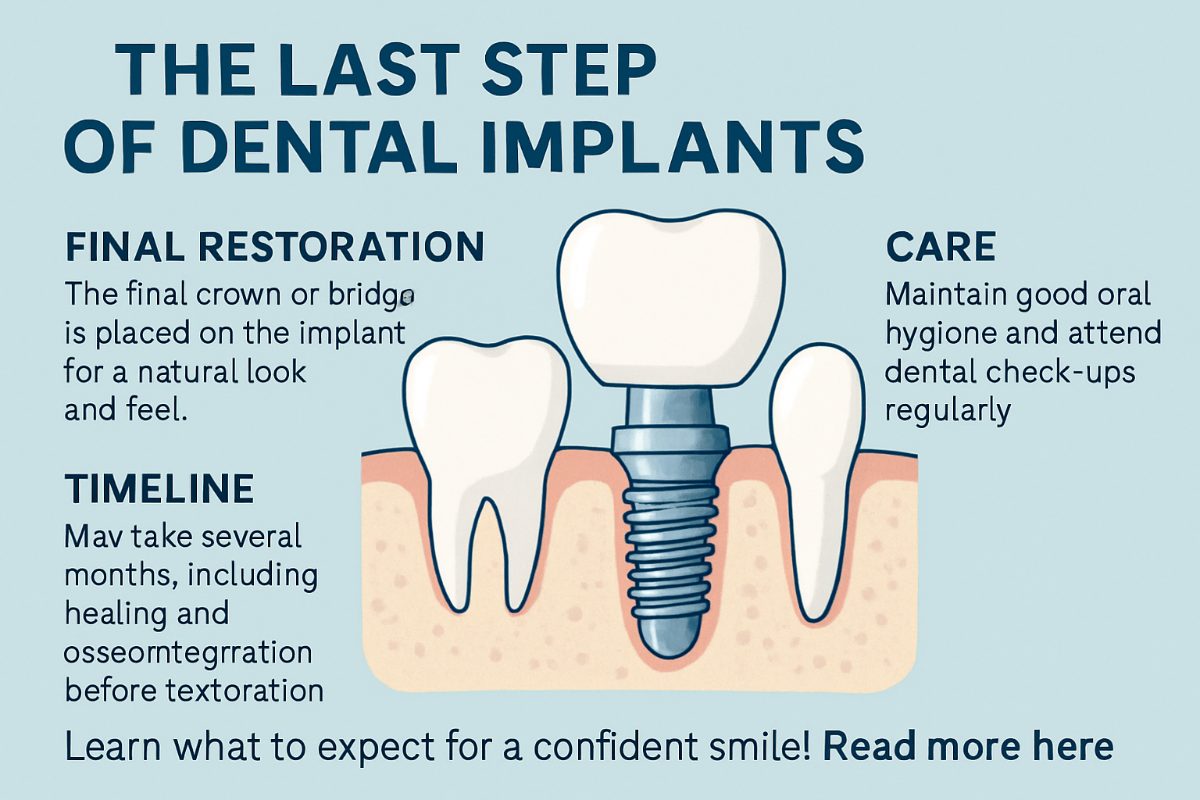
The abutment is the small connector that joins the implant to the visible tooth. During the last step of dental implants your dentist removes healing caps (if used) and attaches the final abutment. A well-fitted abutment helps shape the gum around the tooth, supports the restoration, and reduces the risk of irritation or infection.
Delivery of the crown, bridge, or full-arch prosthesis
Next, the permanent restoration is seated. For a single tooth this is a crown; for several missing teeth it may be a bridge; for full-mouth cases it’s a fixed full-arch prosthesis. The dentist checks how the piece sits, bonds or screws it into place, and polishes it so it looks natural.
Final adjustments and verification
The team checks your bite (occlusion), the fit against neighboring teeth, color match, and comfort. Small adjustments are made to ensure you can chew properly and that the gums look healthy. This step is crucial — a precise fit prevents long-term problems like uneven wear or soreness.
When does the last step happen?
Typical timelines
Timelines vary by case:
- Single-tooth implants: final restoration often placed 3–4 months after implant surgery.
- Multiple implants: 3–6 months depending on sites and stability.
- Full-arch/same-day workflows: some practices provide provisional teeth same day and final restorations in weeks to months; advanced workflows can shorten this.
Factors that change timing
Things that delay the finishing stages include bone grafts, sinus lifts, infections, smoking, and medical conditions like uncontrolled diabetes. Extra procedures add healing time before the final restoration can be safely attached.
How the final appointment usually goes
Expect a focused visit that often takes 30–90 minutes. Your dentist may take X-rays or a quick scan, try the restoration in place, make adjustments, and then permanently attach it. Afterward you may feel minor gum tenderness or sensitivity for a few days.
Preparation tips
- Bring any list of questions for the dentist.
- If you had sedation planned, arrange a ride home.
- Expect temporary sensitivity; soft foods for 24–48 hours can help.
Care after the last step of dental implants
Daily hygiene and home care
Clean around implants like natural teeth: brush twice daily, floss or use interdental brushes, and rinse with an antimicrobial mouthwash if recommended. Special tools (water flossers, implant floss) can help. Avoid extremely hard foods for a short time if your dentist advises it.
Follow-up schedule and signs to call your dentist
Plan routine checkups and cleanings every 3–6 months initially, then as advised. Contact your dentist if you notice worsening pain, swelling, persistent bleeding, or any looseness of the restoration — these are signs you should be evaluated promptly.
How modern technology improves the finishing stages
Digital tools make the last step of dental implants more accurate and faster. CBCT scans and computer-guided surgery plan precise implant positions. Digital impressions and in-house 3D printing or milling let labs create restorations that fit better and look more natural. Digital smile design lets patients preview results before the final prosthesis is made.
Why patients choose Smile Rescue for their final implant stage
At Smile Rescue in Louisville, KY, Dr. Seth Chambers and the team use 3D CBCT imaging, guided surgery, and in-house milling to deliver predictable final restorations. Their all-in-one approach reduces visits and surprises, and the practice handles complex cases — including zygomatic implants — when bone loss would otherwise delay results. Many patients leave with same-day provisional teeth and receive final restorations with precise fit and natural appearance.
Questions to ask at your final appointment
- How long will this restoration last?
- What maintenance is required and how often?
- Who do I call if I have pain, swelling, or a loose restoration?
- Are warranties or follow-up visits included?
Closing summary
The last step of dental implants is the moment your permanent teeth are seated, adjusted, and verified for comfort and function — the final touch after healing. If you’re approaching this stage and want a confident, precise finish, contact Smile Rescue to schedule a final-stage consult with Dr. Seth Chambers.