If you’ve asked “what dentist does implants,” the short answer is: several types of dentists can place dental implants. General dentists, oral and maxillofacial surgeons, periodontists, and prosthodontists all play roles. This article explains who does implant work, what each provider does best, and how to pick the right dentist so implants are the right choice for you.
Read on to learn who can place implants, what to expect during the process, and practical steps to find a safe, predictable implant solution you can afford and trust.
Who places dental implants? Answering “what dentist does implants”
Different dental professionals can place implants. Each brings unique training and strengths. Understanding the differences helps you choose the right provider for simple or complex cases.
General dentists
Many general dentists place implants for straightforward cases, like single-tooth replacements or a few implants for limited bridges. They often handle the full process if they have implant training and chairside experience. General dentists typically refer patients to specialists when bone loss, complex anatomy, or advanced surgical skills are needed.
Oral surgeons, periodontists, and prosthodontists
Specialists focus on parts of implant care:
- Oral and maxillofacial surgeons handle complex surgery, extractions, and major bone grafting. They treat difficult anatomy and medical cases.
- Periodontists specialize in gum and bone health, ideal for patients needing tissue or bone reconstruction before implants.
- Prosthodontists focus on the final tooth replacement—the crowns, bridges, or denture-like prosthetics that attach to implants. They ensure form, function, and aesthetics.
For many patients, teams work together: a surgeon places the implants, and a prosthodontist or trained general dentist completes the restorations.
How to choose the right implant dentist
When you search for “what dentist does implants” for your care, look beyond basic claims. Evaluate training, technology, and how clearly they explain cost and comfort.
Training & experience
- Ask about implant-specific residency training or continuing education courses.
- How many implants does the clinician place per year? Experience matters.
- Find out if they mentor others, teach, or present at implant meetings—these are strong indicators of expertise.
Technology & treatment scope
Advanced tools improve safety and outcomes. Look for providers who use 3D CBCT imaging for planning, digital smile design to preview results, and computer-guided surgery for precise placement. Practices with in-house milling or 3D printing can often deliver faster, more accurate restorations, including same-day teeth in some cases.
Clear pricing and patient comfort
Ask for all-inclusive quotes that list fees for implants, abutments, restorations, sedation, extractions, and any grafting. Also ask about sedation options (IV, oral, nitrous) and what to expect for recovery so you feel comfortable and informed.
What to expect during the implant process
Knowing the stages helps you set realistic expectations and choose the right provider.
Consultation and planning
The first visit should include a medical/ dental history review, 3D imaging (CBCT), and a clear treatment plan with timeline and costs. Digital mockups or a smile preview help you see the expected result before treatment begins.
Surgery and restoration
Surgery can range from a single implant placed in a quick visit to full-arch reconstructions requiring grafting or advanced techniques. Sedation choices vary by patient need. Guided implant placement uses a pre-made surgical guide for accuracy. If bone grafting or sinus lifts are needed, those may add steps and healing time before final teeth are attached.
Recovery and long-term care
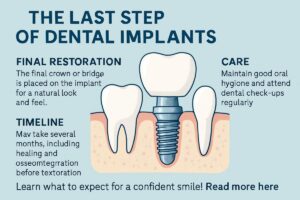
Initial healing usually takes a few weeks, with full osseointegration (bone bonding to the implant) taking several months in many cases. Follow-up visits confirm healing and allow the final prosthesis to be placed. Long-term success depends on oral hygiene, routine dental care, and regular checkups.
Why consider Smile Rescue and Dr. Seth Chambers for implants
If you’re asking “what dentist does implants” and want a center focused on implant care, Smile Rescue in Louisville specializes exclusively in advanced implant solutions. Led by Dr. Seth Chambers—an implant surgeon who places over 1,000 implants a year—the practice combines surgical skill with a full in-house digital workflow.
Key benefits include 3D CBCT planning, computer-guided surgery, digital smile design, and on-site 3D printing and milling for faster, more precise restorations. Smile Rescue also offers complex options like zygomatic and pterygoid implants for severe bone loss, same-day teeth solutions, multiple sedation options, and transparent all-inclusive pricing that covers surgery, grafting, and restorations.
If you’re ready to learn whether implants are right for you, schedule a consultation to review your 3D scan, see a digital preview of your smile, and get a clear, personalized plan and price. A single consult can show whether implants are a safe, long-lasting solution for your smile.