If you need a missing tooth replaced, this guide will walk you through the steps for a tooth implant in plain language. You’ll learn what an implant replaces, the typical stages and timing, what recovery looks like, and which questions to ask your surgeon so you can make confident choices.
This overview is for anyone considering an implant—whether you need a single crown, an implant-supported bridge, or an implant-retained denture. Read on for clear, easy-to-follow steps and practical next steps.
Understanding Tooth Implants: Basics You Should Know
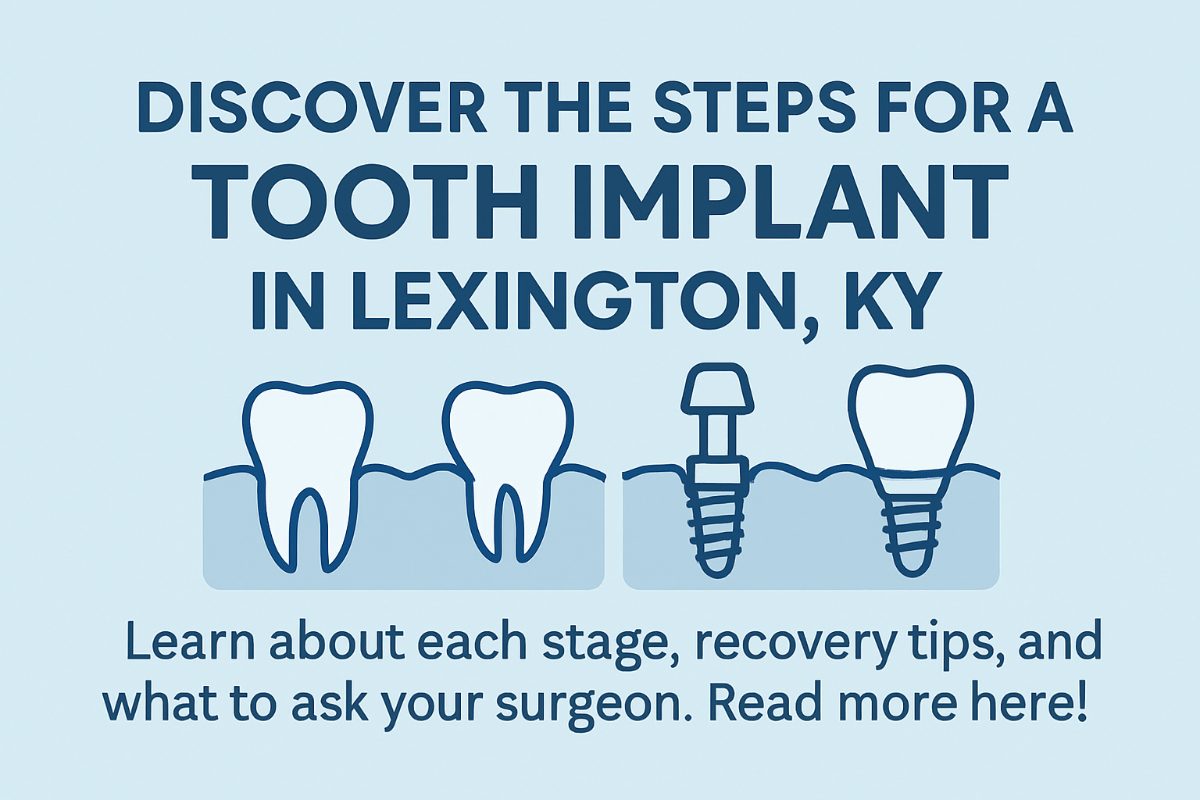
A dental implant replaces both the tooth root and the visible tooth. The implant (a titanium or ceramic post) sits in the jawbone and supports an abutment and a crown. Together they restore chewing, speech, and appearance.
Common restoration types:
- Single crown — replaces one missing tooth.
- Bridge on implants — replaces several teeth in a row.
- Implant-retained denture — secures a full arch for stability and comfort.
Typical candidates are adults in good overall health with adequate bone or who are willing to have bone grafting. Smokers and people with uncontrolled diabetes may need extra evaluation and care.
Step-by-Step: Typical Stages in the steps for a tooth implant
1) Consultation, exam, and 3D imaging
First, your surgeon reviews medical history and does an oral exam. A CBCT (3D) scan checks bone volume, nearby nerve and sinus locations, and implant site angles. Many practices use Digital Smile Design to show expected results and set realistic expectations before treatment begins.
2) Preparatory care: extractions, bone grafts, or sinus lifts
If a damaged tooth must be removed, extraction may be done before implant placement or at the same time, depending on the case. Bone grafts or sinus lifts are used when there’s not enough bone to hold an implant. Typical healing times:
- Simple extraction: 4–8 weeks before implant placement in many cases.
- Bone graft: 3–6 months to integrate before placing the implant (sometimes shorter with advanced grafting).
- Sinus lift: 4–9 months before implant placement depending on the amount of grafting needed.
These steps protect long-term stability and reduce the chance of implant failure.
3) Surgical placement of the implant
During surgery the implant is positioned in the jawbone. Sedation options include nitrous oxide, oral sedation, or IV sedation for comfort. Computer-guided surgery uses the CBCT data and a surgical guide to place implants precisely. Most single implant procedures take 30–90 minutes; more complex cases take longer.
4) Healing and osseointegration
After placement, the implant bonds to bone in a process called osseointegration. Expect 3–6 months for full integration in most cases. Normal healing signs are mild swelling, light bruising, and gradual reduction of soreness. Call your surgeon for persistent severe pain, increasing swelling, fever, pus, or any implant mobility—these can be signs of infection or other complications.
5) Abutment and final restoration
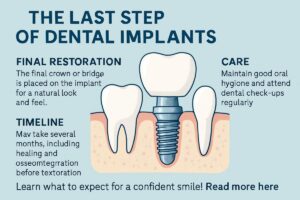
Once integrated, the abutment (connector) is placed and impressions are taken for the final crown or prosthesis. Many clinics now offer same-day provisional teeth using in-house 3D printing, with a final zirconia or porcelain restoration delivered after finer adjustments. Final fit and bite checks ensure comfort and function.
What To Expect During Recovery: Pain, Diet, and Follow-Up
Pain is usually mild to moderate and peaks in the first 24–48 hours. Over-the-counter pain relievers or prescription meds manage discomfort. Use ice for swelling, avoid strenuous activity for 48–72 hours, and stick to soft foods for 1–2 weeks near the implant site.
Oral hygiene: gentle brushing and a saline rinse after 24 hours helps healing. Typical follow-up visits occur at 1 week, 1 month, and at intervals during osseointegration, with the final restoration appointment once healing is confirmed.
Return to work depends on the procedure: many patients resume normal activities in 1–3 days after a simple implant; more complex surgeries or grafting may require longer recovery.
Common Risks, Success Rates, and Longevity
Main risks include infection, implant failure, nerve or sinus injury, and complications from grafting. With modern planning and technology, implant success rates are generally over 95% for healthy patients. With good oral hygiene and regular dental care, implants can last decades or a lifetime.
Cost, Insurance, and Financing Options
Cost factors: number of implants, need for grafting or extractions, sedation choice, and the type of final restoration. Dental insurance may cover parts of treatment (like extractions or crowns) but often not the implant itself. Common payment options include flexible spending accounts (FSA/HSA), third-party dental financing, and in-house payment plans. Ask about all-inclusive pricing to avoid surprise fees for sedation, grafting, or lab work.
How To Prepare and Questions To Ask Before Your Appointment
Bring a complete medical history and a list of medications. Consider this short checklist of questions:
- How many implants have you placed and what is your complication rate?
- Do you use CBCT 3D imaging and computer-guided surgery?
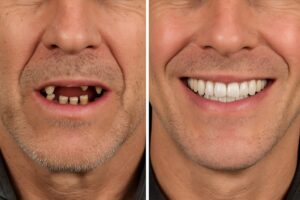
- Can I see before-and-after cases similar to mine?
- What sedation options are available and what do they cost?
- Is pricing all-inclusive (sedation, extractions, grafting, final restoration)?
- What is the expected timeline from start to finish?
Why Choose a Specialized Implant Center for your tooth implant
Specialized implant centers focus on predictable results and streamline care. Smile Rescue in Louisville is dedicated to implant dentistry with advanced tools that improve outcomes. Led by Dr. Seth Chambers, a nationally recognized implant surgeon, the practice places over 1,000 implants annually and uses 3D CBCT imaging, computer-guided surgery, and in-house 3D printing to provide precise, efficient care.
Smile Rescue also offers solutions for complex cases, including zygomatic and pterygoid implants for severe bone loss, and provides transparent, all-inclusive pricing that can cover sedation, extractions, and grafting so there are no hidden fees.
Next Steps: Booking a Consultation
If you want clear steps for a tooth implant and a personalized plan, schedule a consultation. A thorough exam, CBCT scan, and Digital Smile Design review will outline timing, costs, and the best path forward. Smile Rescue offers same-day provisional teeth in many cases and comprehensive care for even the most complex situations. Book a consult to get a clear timeline and written treatment plan.