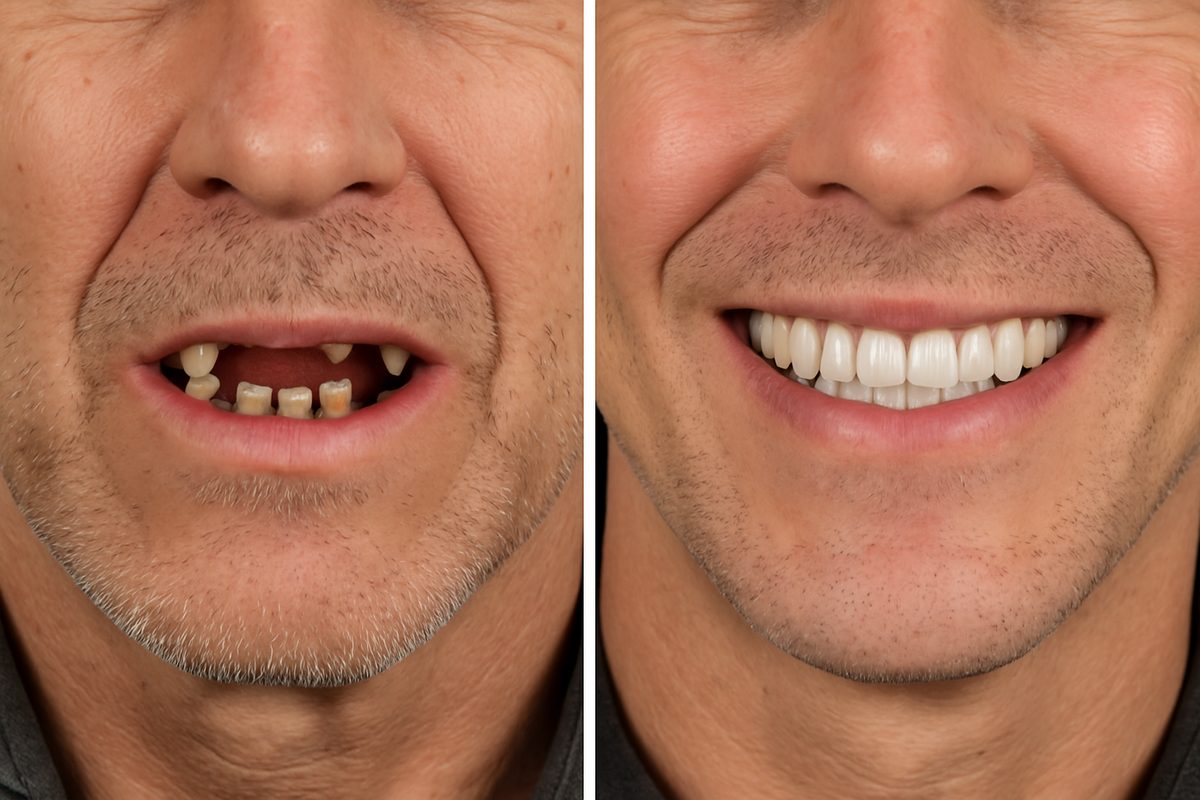
Thinking about getting “all new teeth“? This usually means replacing a full arch of failing or missing teeth with a fixed, implant-supported prosthesis. Many people choose this option to stop struggling with loose dentures, painful teeth, or limited chewing. This guide explains what “all new teeth” means, who is a good candidate, treatment choices, what to expect, benefits and risks, and practical next steps.
What “All New Teeth” Really Is
“All new teeth” refers to full-arch implant solutions that replace an entire upper or lower set of teeth with a permanent prosthetic. Unlike removable dentures, implant-supported arches are fixed to dental implants and feel much more like natural teeth. This approach differs from single-tooth implants, which replace only one tooth at a time.
Patients will hear terms like all-on-4, all-on-6, full-arch zirconia, and implant-supported dentures. All are ways to describe full-arch restoration options — some use fewer implants for immediate function, others use strong zirconia for a long-lasting, natural look. If you’re researching all new teeth in Louisville, this is the basic landscape you’ll encounter.
Who Is a Good Candidate for All New Teeth?
Oral health and bone status
Candidacy depends mostly on mouth health. Severe decay, gum disease, and infected or failing teeth usually need treatment or removal before implants. Bone loss is common after tooth loss and affects where implants can be placed. Many patients with moderate bone loss can still get solutions like all-on-4, while more severe upper jaw loss may require zygomatic or pterygoid implants. Advanced techniques help people with bone loss avoid long grafting procedures.
Medical and lifestyle factors
Overall health matters. Controlled diabetes, good immune health, and quitting smoking improve outcomes. Heavy smokers or uncontrolled systemic disease raise complication risks. Realistic expectations are important: even with “all new teeth in Louisville,” implants need daily care, periodic checkups, and sometimes maintenance like screw tightening or prosthetic adjustments.
Typical Treatment Options for All New Teeth
All-on-4 / All-on-6
All-on-4 and all-on-6 use four or six implants to support a full arch. The angled placement often avoids areas of poor bone and can allow same-day temporary teeth. Benefits include fewer implants, shorter treatment time, and often immediate function. Typical timeline: consultation and CBCT scan, planning and design, extractions if needed, implant surgery with temporary teeth, then final prosthesis after healing (usually a few months).
Zygomatic & pterygoid implant solutions
Zygomatic and pterygoid implants anchor into denser bone higher in the skull. They’re for people with severe upper jaw bone loss who want to avoid long bone grafts. These options require surgeons with advanced experience but can restore chewing and esthetics when traditional implants aren’t possible.
Full-arch zirconia restorations
Full-arch zirconia prosthetics are milled from high-strength ceramic. They offer excellent durability and a natural appearance with less fracture risk than older acrylic-based bridges. Many patients who choose all new teeth in Louisville opt for zirconia when long-term strength and esthetics are priorities.
What to Expect: Planning, Surgery, and Recovery
Modern implant care begins with a 3D CBCT scan and digital smile design so you and your surgeon can preview results. Computer-guided surgery improves accuracy. Many centers offer same-day temporary teeth so you leave with functioning teeth. Sedation options range from nitrous oxide to IV sedation for comfort. Recovery typically includes mild swelling and soreness for a few days, a soft-food diet for 1–2 weeks, and final restorations after the implants integrate (2–4 months depending on the case).
Benefits and Risks of Choosing All New Teeth
- Benefits: stable chewing, improved speech, natural appearance, confidence, and jawbone preservation compared with dentures.
- Risks: infection, implant failure, prosthetic issues, and surgical complications. Careful 3D planning and guided surgery reduce most risks.
Why Choose a Specialized Implant Center for All New Teeth
A center focused on implants brings higher case volume, streamlined digital workflows, in-house prosthetics, and integrated surgical care. That means more consistent results, fewer surprises, and the ability to handle complex cases like severe bone loss without referring out. If you’re searching for all new teeth in Louisville, a specialized practice typically delivers safer, faster, and more predictable care.
Why Smile Rescue Is a Strong Choice for All New Teeth
Smile Rescue is Louisville’s dedicated implant center led by Dr. Seth Chambers. The practice performs a high volume of implant cases annually and uses 3D-guided planning, in-house 3D printing, and same-day restorations. Dr. Chambers trains other surgeons and offers advanced options such as zygomatic implants for severe cases. For patients seeking all new teeth in Louisville, the team offers a streamlined, transparent process with care provided under one roof.
Costs, Financing, and What “All-Inclusive” Should Mean
Price drivers include extractions, bone grafting, number of implants, type of prosthetic (acrylic vs. zirconia), and sedation. True all-inclusive pricing should cover exams, CBCT imaging, sedation, extractions, implants, and the final prosthesis with clear terms. Many practices offer financing plans and work with dental insurance to offset some costs. When comparing offers for all new teeth in Louisville, ask for a written all-inclusive estimate and what follow-up care is included.
How to Get Started With All New Teeth
- Schedule a consultation with an implant specialist.
- Get a CBCT scan and a digital smile preview.
- Review personalized treatment options, timelines, and costs.
- Discuss sedation and health clearance if needed.
- Plan finances and set a surgery date.
Closing takeaway
If you’re considering “all new teeth,” seek a specialty implant evaluation to learn which full-arch solution fits your health, goals, and budget. With modern planning, guided surgery, and the right team, many people can leave the office with stable, natural-looking new teeth and a renewed quality of life.